
Introduction
As Senior UX Designer/Manager for Nutrien Ag Solutions, I led a group of 12 UX designers and researchers as we modernized the tools used by Nutrien’s sales force of more than 20,000 crop consultants. In this case study I will describe how I used design thinking to solve thorny problems in agriculture. This document is organized as follows:
- Field Research: Building a Deep Understanding of the User
- Prototyping: Developing a More Meaningful Employee Dashboard
- Equipping the Sales Force: Identifying Sales Opportunities
- Improving the Pre-Sales Process: Selecting the Right Product and Delivering the Best Price
- Placing Orders: Reducing Errors by Understanding Complex Systems
1. Field Research
Building a Deep Understanding of the User
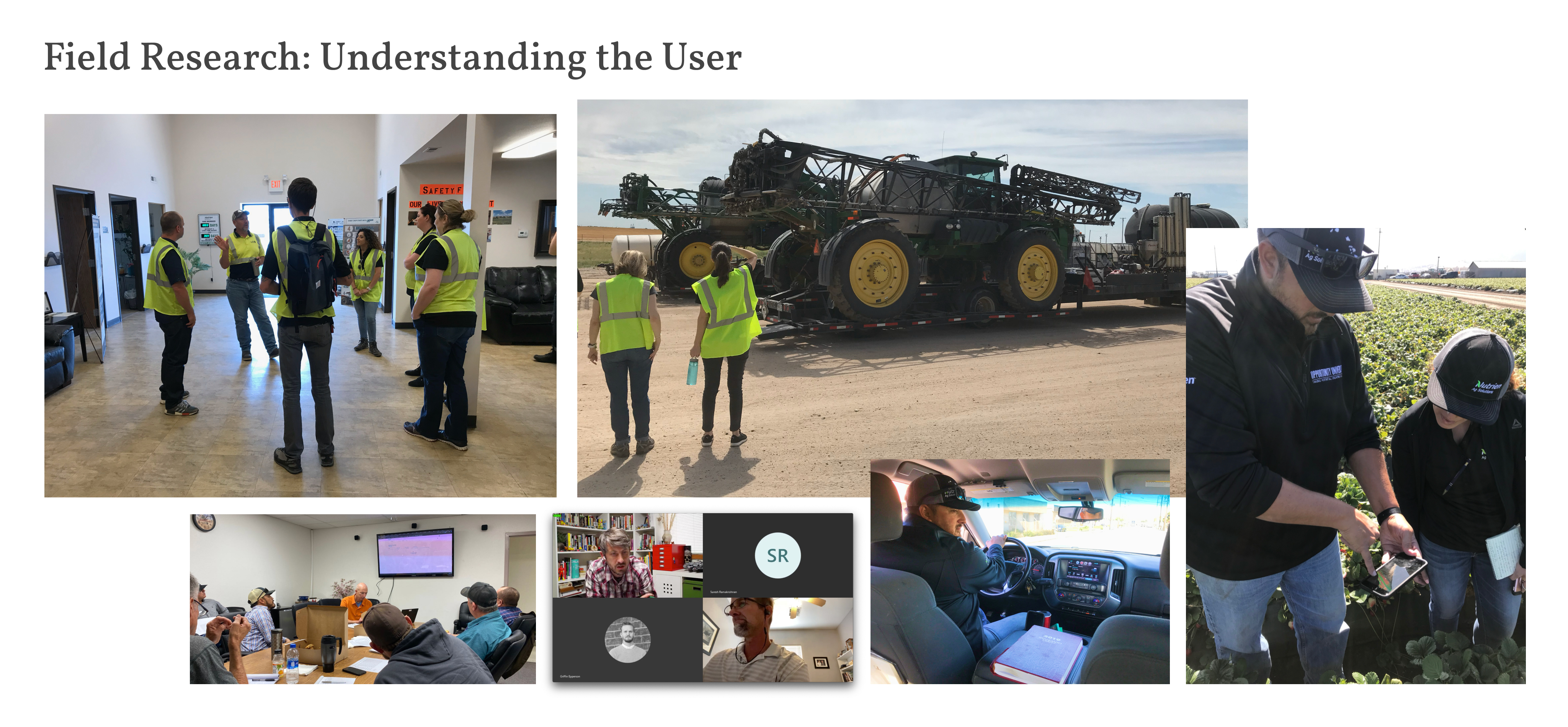
Nutrien has over 1,700 locations around the world. Each region has unique terrain, weather, pests, and sales practices. To successfully sell fertilizer, chemicals, and seed to farmers requires deep knowledge and training. This is why Nutrien refers to their sales people as “crop consultants.” These experts often know more about agronomy than the farmers they are selling to. Their expertise and reputation results in a trusted relationship that is unique to agriculture. Unlike traditional sales, farmers recognize that a recommendation from a crop consultant is more like a prescription from a doctor than a sales pitch. As a result, crop consultants have relationships with their farmer customers that span years if not decades.
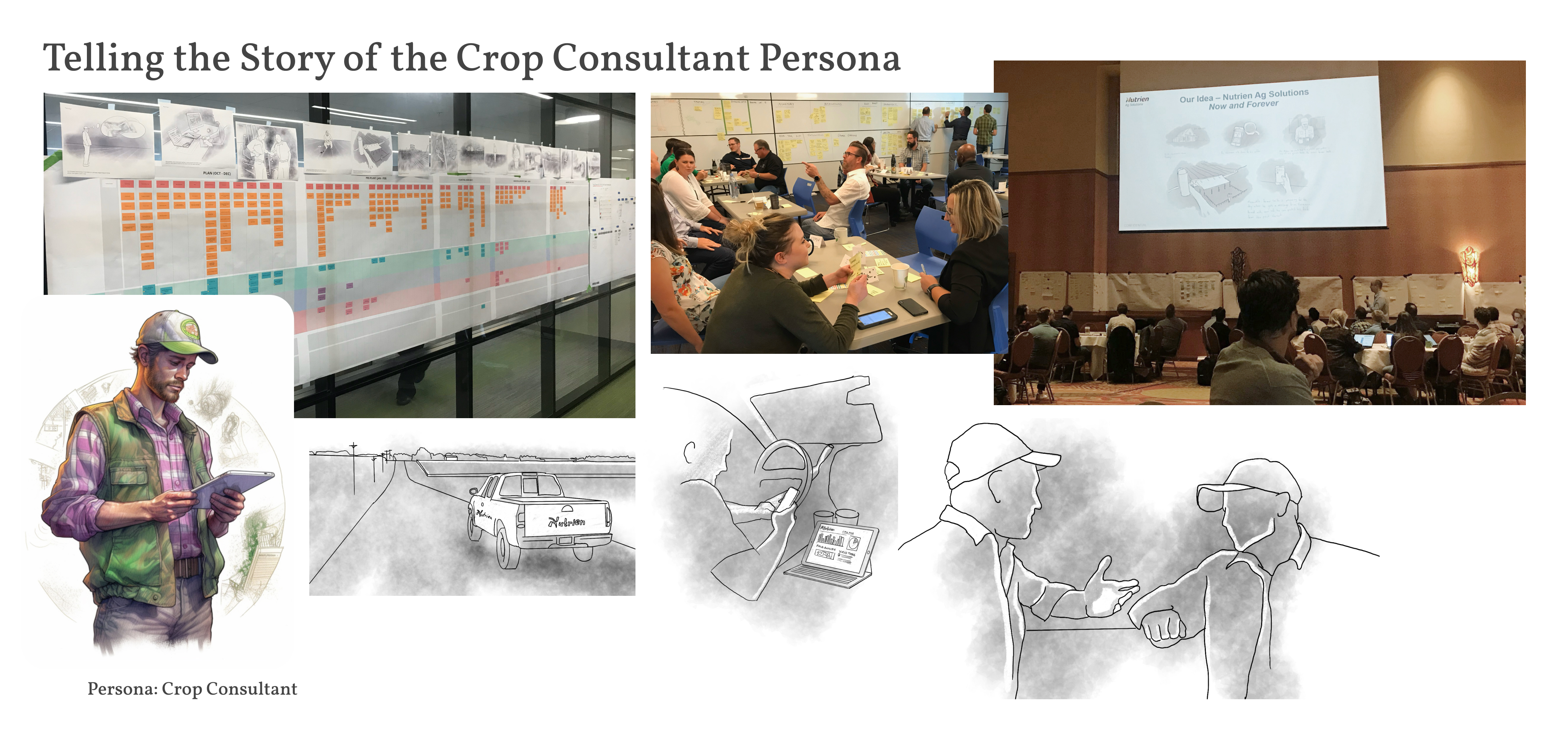
Having access to crop consultants was incredibly valuable as we reimagined the ag sales experience. I traveled into the field to see facilities in action. I sat in offices listening to sales calls. I road along with crop consultants and observed how they got their job done from their trucks. I listened to their frustrations and gathered ideas. I used this research to craft stories that I brought back to the teams. These stories, often accompanied by drawings and photographs took on a life of their own, getting used in quarterly planning events, executive summaries, story mapping exercises, and were referenced in conversations as teams strove to deliver a product that made our target persona’s job easier.
2. Prototyping:
Developing a More Meaningful Employee Dashboard
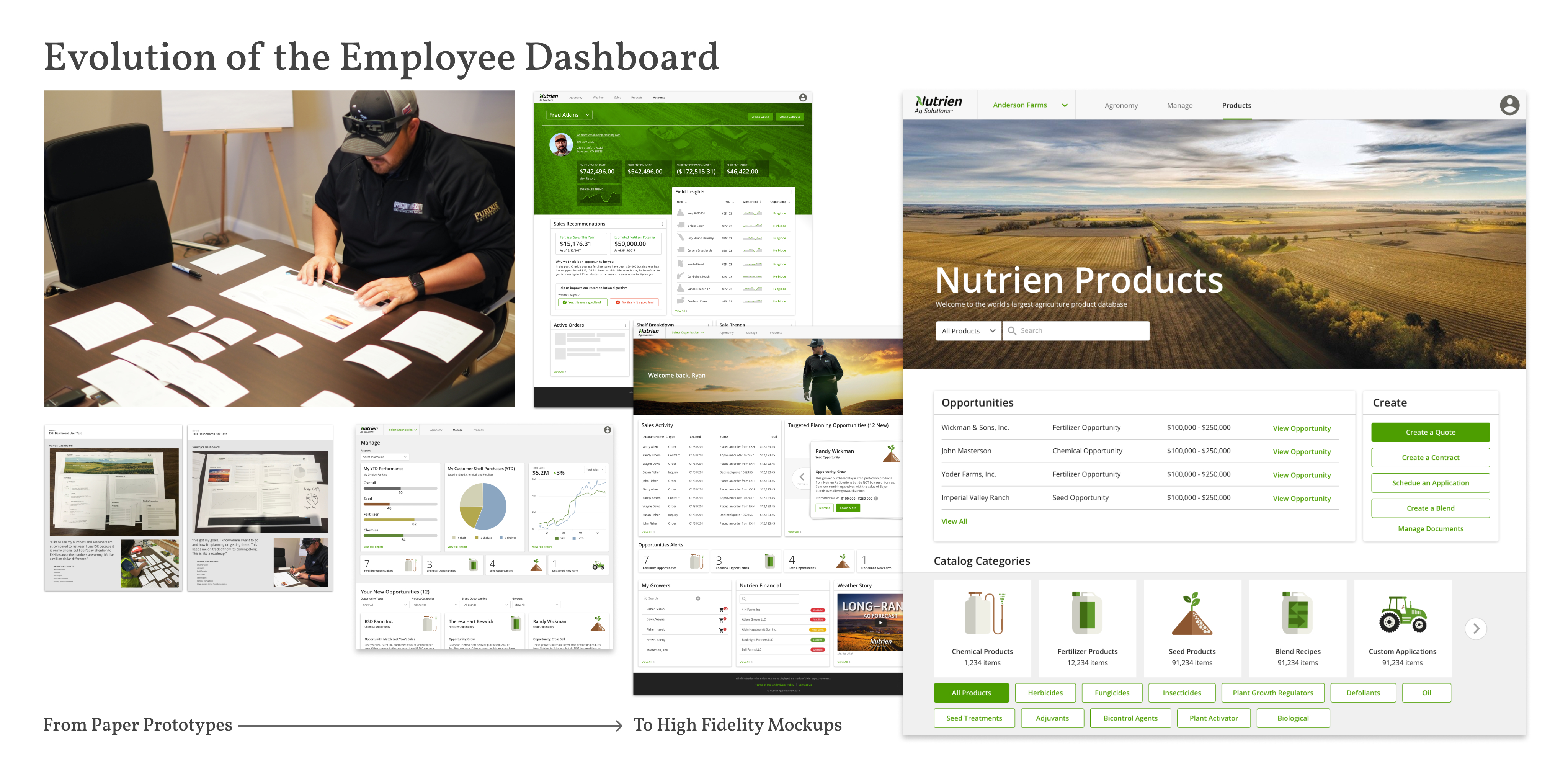
The name of the product we were building was called the "Employee Experience Hub" and became known as "EXH" for short. The first screen of this application was important because it needed to deliver actionable information that helped crop consultants get their work done. To develop this concept, I conducted a user study where paper prototypes were given to crop consultants who were challenged to "build their own dashboard." Each participant started with an empty page and then selected from a collection of dashboard widgets and ideas. As their page filled up I observed and asked questions to understand what they were thinking. I also provided blank cards where users could create their own widgets from scratch. This exercise led to the development of a dashboard concept that addressed the priority, customizability, and valuable information that crop consultants required. The evolution of the employee can be seen below.
3. Equipping the Sales Force
Identifying Sales Opportunities
Early versions of Nutrien’s e-commerce platform failed because it relied on traditional shopping cart patterns. Unlike Amazon where users “add to cart” then proceed to checkout, the sales process in agriculture is much more complicated.
As an example, a farmer knows they will need fertilizer long before their season begins so a “sale” often starts as a loose agreement that lets them reserve products before planting. When it comes time to use some of the fertilizer they reserved, an estimate is created that takes into account application rates, acres, mixture ratios, and equipment costs. This estimate is refined based on availability of products, often resulting in corrections as situations change.
To assist with the different scenarios a crop consultant is planning for, the Employee Experience Hub provided tools to help identify pests, check inventory from nearby branches, and understand the implications that weather patterns and growth stages have on the needs of a field.
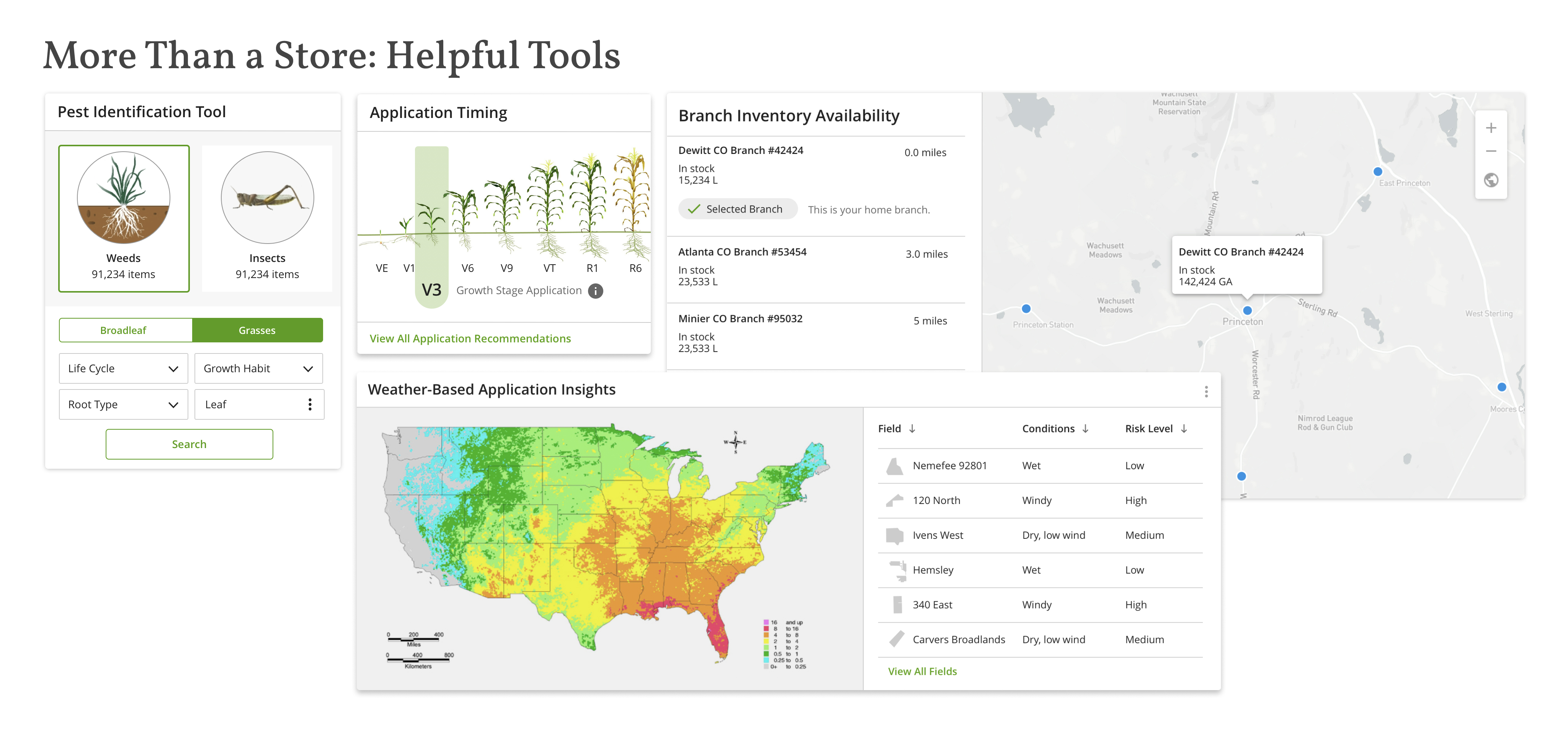
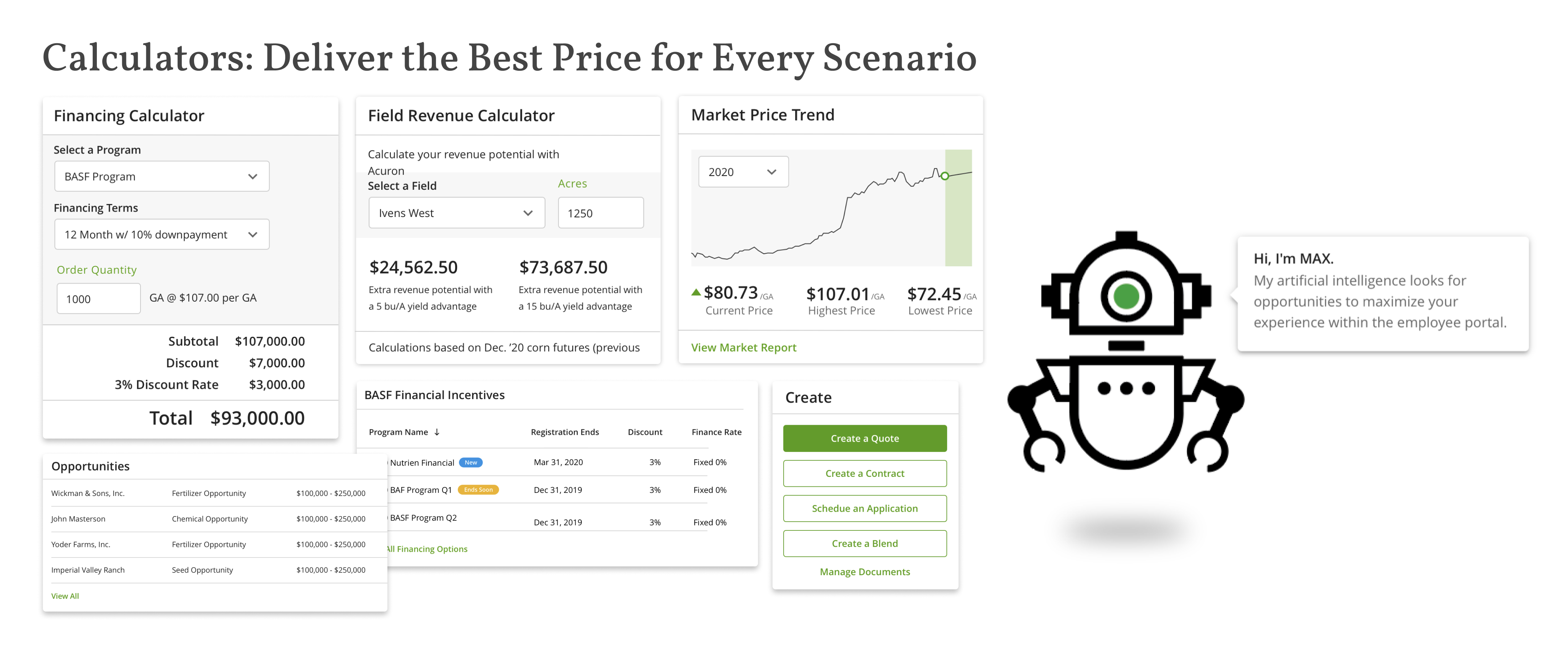
The financial situation for each farmer is unique and a big part of the crop consultant’s job is customizing proposals that meet the individual needs for each customer. We created a field planning tool as well as calculators so that proposals accounted for factors such as partner incentive programs, market trends, revenue projections, financing options, and historical sales trends. Prior to the AI boom, we were already using machine learning to identify lost “sales opportunities” that crop consultants might otherwise miss. The user-facing element of our model was nicknamed “Max.”
4. Improving the Pre-Sales Process
Selecting the Right Product and Delivering the Best Price
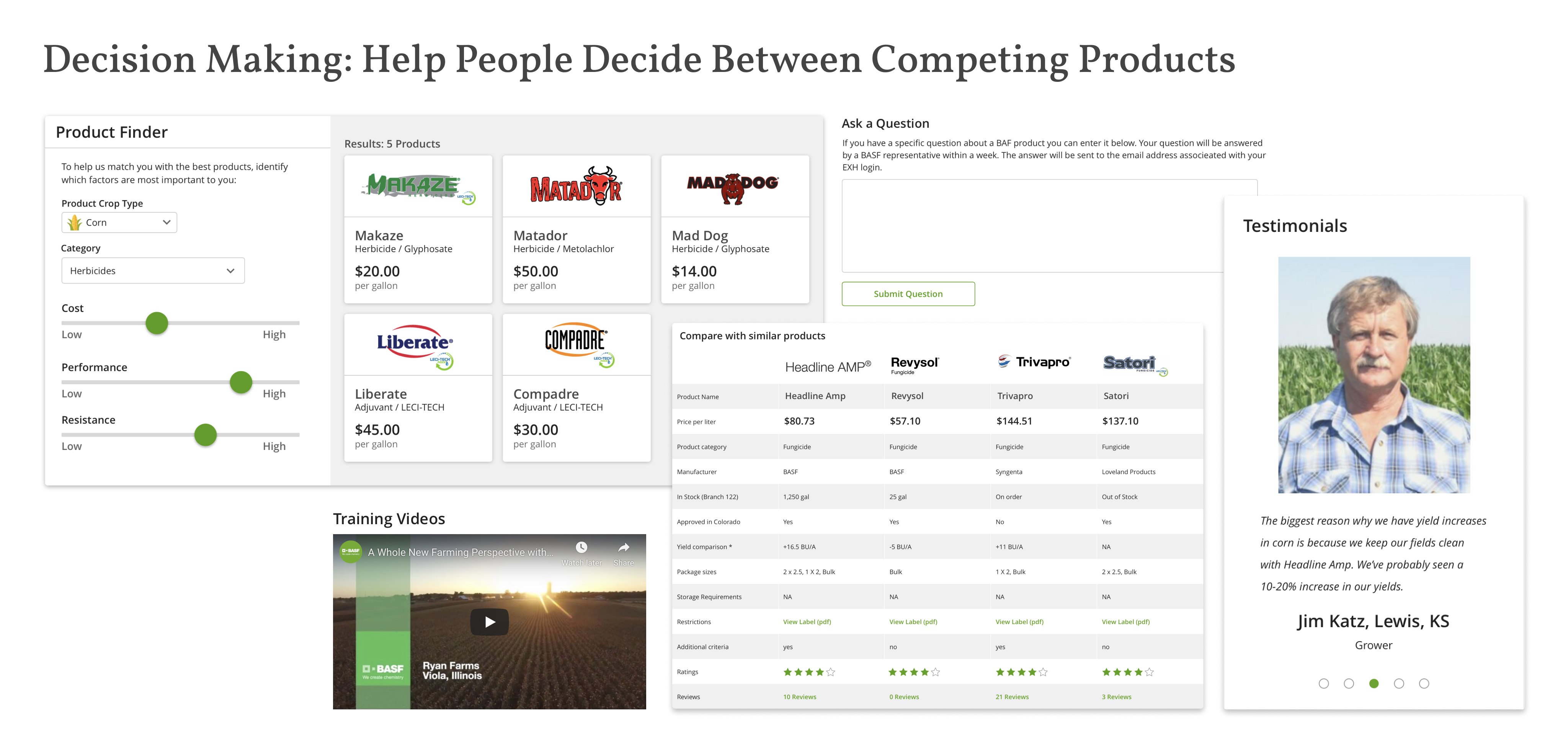
Beyond the agronomic knowledge required to evaluate the needs of a farm, choosing the right products is equally challenging because it involves balancing the risks and benefits against factors of cost, performance, and historical knowledge of the field. To assist in this process, the employee experience hub tested a “product-finder” concept, product comparison tables, and related-product cross-linking strategies. We also explored a system that allowed crop consultant to ask questions to experts directly from the product catalog. I led an effort to improve product description pages by adding active ingredients, resistance information, links to similar products, training videos, regulatory notices, restrictions, labels, and testimonials.
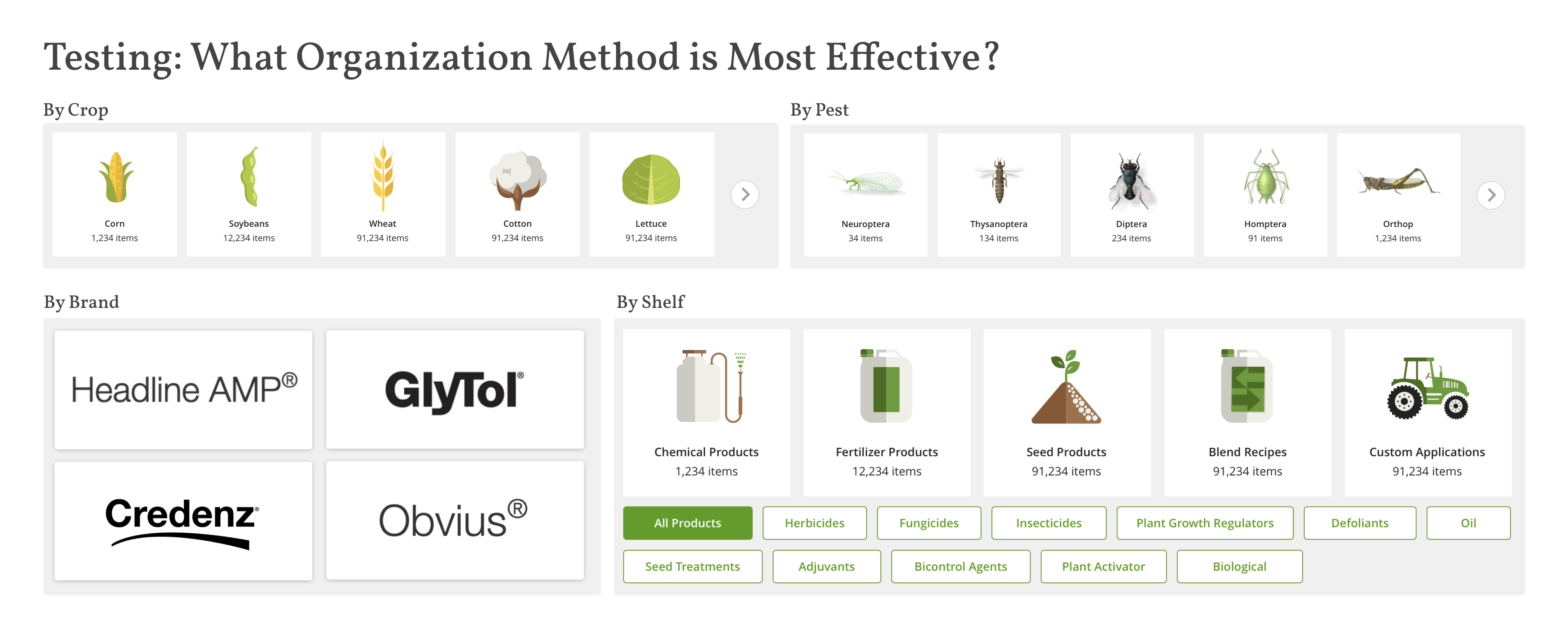
We also experimented with different organization patterns that better mapped to the mode of thinking that the crop consultant was in when searching for products. For example, if the crop consultant knows they have an infestation problem, they should be able to browse the catalog by the type of pest they have identified in the field. Multiple paths can lead to the same product depending on if the user is browsing by crop, brand, shelf, or active ingredient.
5. Placing Orders
Reducing Errors by Understanding Complex Systems
After a crop consultant submits an order, a complex fulfillment process begins. The “Add Product” form may appear simple but there are complex business systems connected to every carefully crafted field and dropdown menu. For example after submitting an order for fertilizer, a series of physical events take place. At the facility, dozens of orders are in-progress at any given time making organization crucial. Orders typically get printed out and attached to peg boards along a wall where they are moved down the line as the order progresses. Fertilizer is often a "blend" of multiple products which means that large quantities of products are weighed and poured into machines to be mixed. The mix is then transferred to trucks for transport. Overages, shortages, product substitutions, and imperfect blending is common. In the warehouse, inventory levels are monitored and adjusted as products are received and delivered.
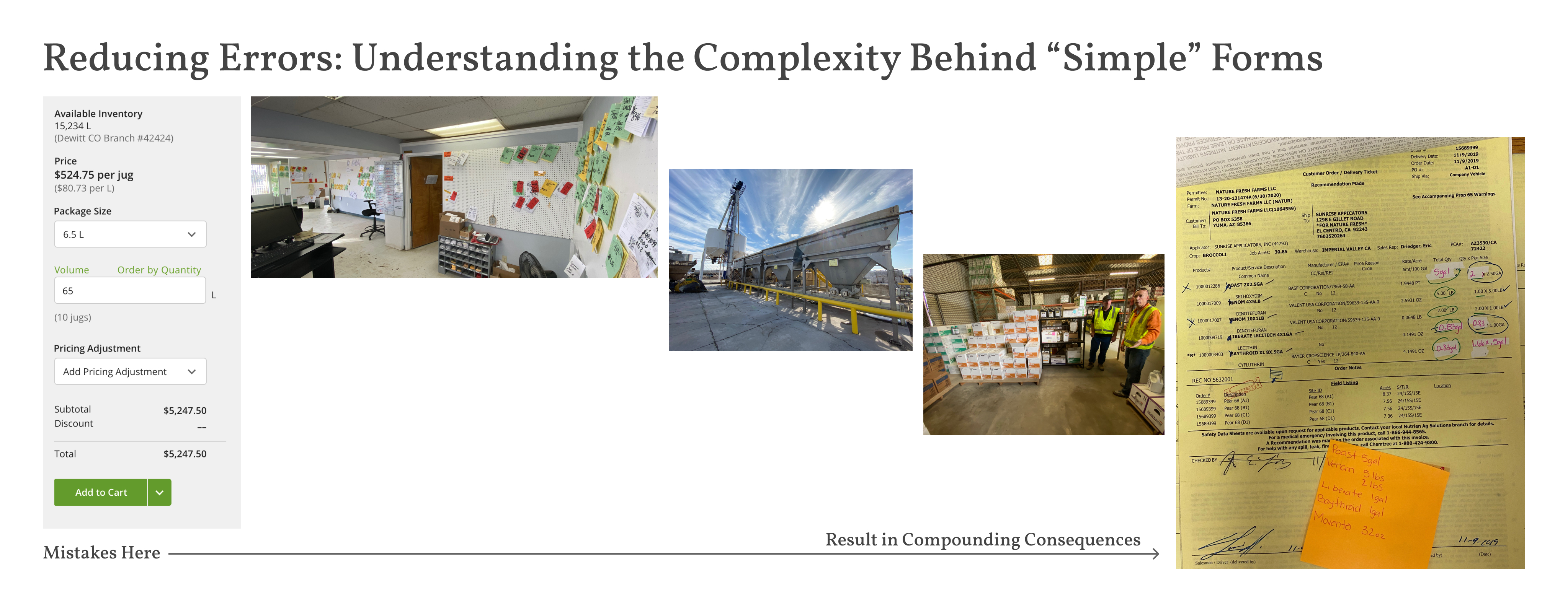
By understanding the real-world connections between the submission form and the facility that fulfills the order we were able to reduce the amount of errors and tedious corrections made after an error was placed.
Conclusion
Prior to working at Nutrien I had little understanding of agriculture but after three years of immersive problem solving I came away with a immense respect for farmers and the amazing systems that allow us to feed the world. Thank you for taking the time to read this case study and I hope it has given a glimpse into how I helped Nutrien apply design thinking to improve the agricultural sales process.