From Runners to Farmers: UX Problems Are Universal
A cross-industry perspective drawn from my work across five fitness technology companies and one of the world’s largest agriculture companies
Introduction
On paper, designing a training app for runners and designing sales software for crop consultants have nothing in common. One audience is chasing personal records; the other is deciding how to fertilize a field. But after leading design in both worlds — first in fitness technology (TrainingPeaks, Athlinks, and Runcoach), then in agriculture at Nutrien — I came away convinced that the differences between fitness technology and ag tech are not as different as you might assume. This is a short argument for why, and what it means for how we design.
1. The Same Opportunity
Both industries are sitting on an enormous, underused archive of data. Runcoach has years of training history for every athlete. Nutrien holds what is arguably the largest archive of agronomic data in the world. In both cases the opportunity wasn’t to collect more data — it was to turn the data already there into insight a person could act on. The job of design, in both places, was to stand between a mountain of data and a busy human and make it useful.
Additionally, both athletes and farmers use data to optimize for high yield. Farms want maximum output from their crops while athletes want peak performance on race day. Prior to harvest and competition both farmers and athletes are using data to track progress, make better decisions, adapt to unexpected scenarios, and predict outcomes. Good design makes this possible.
2. Building Trust
In both worlds, users are skeptical of being told what to do by software. Runners don’t trust a generic algorithm to understand their bodies. Crop consultants — experts whose advice lands more like a doctor’s prescription than a sales pitch — don’t trust an algorithm to second-guess their fields.
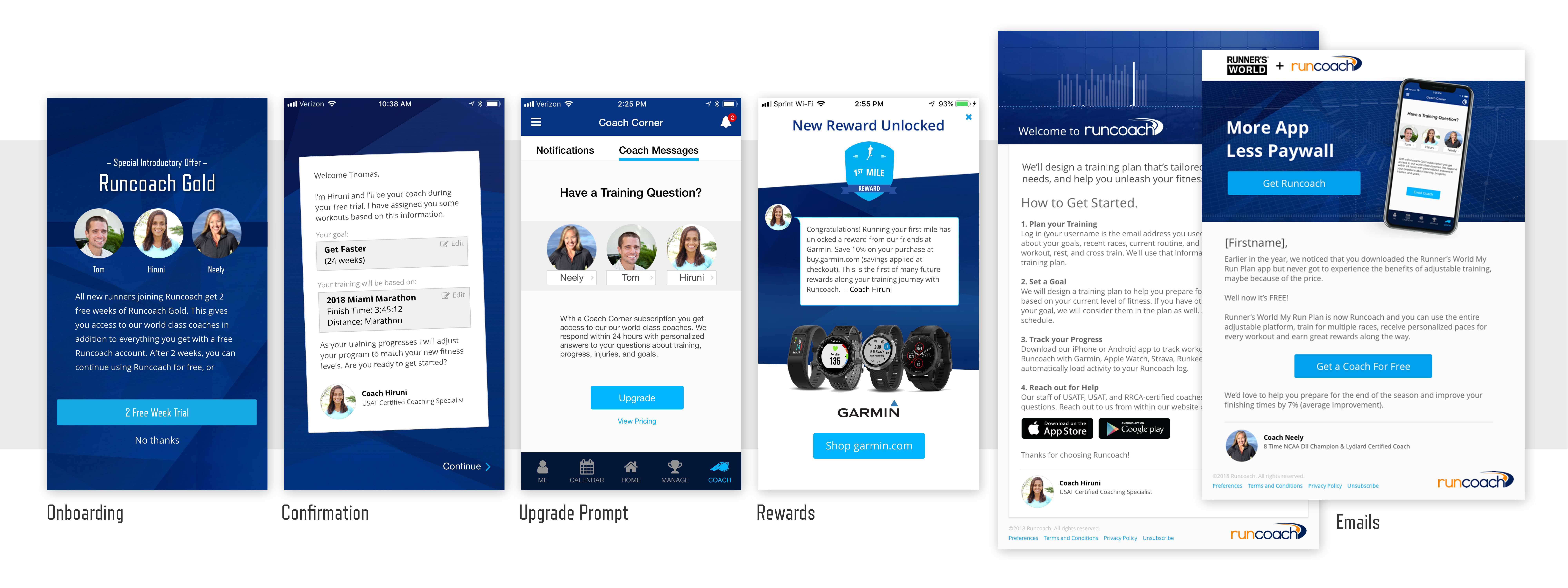
The solution looked surprisingly similar in both. At Runcoach, we earned trust by surfacing the human behind the software — bringing the real coach’s voice into onboarding, notifications, achievements, and email, so the product felt like a relationship instead of a formula.
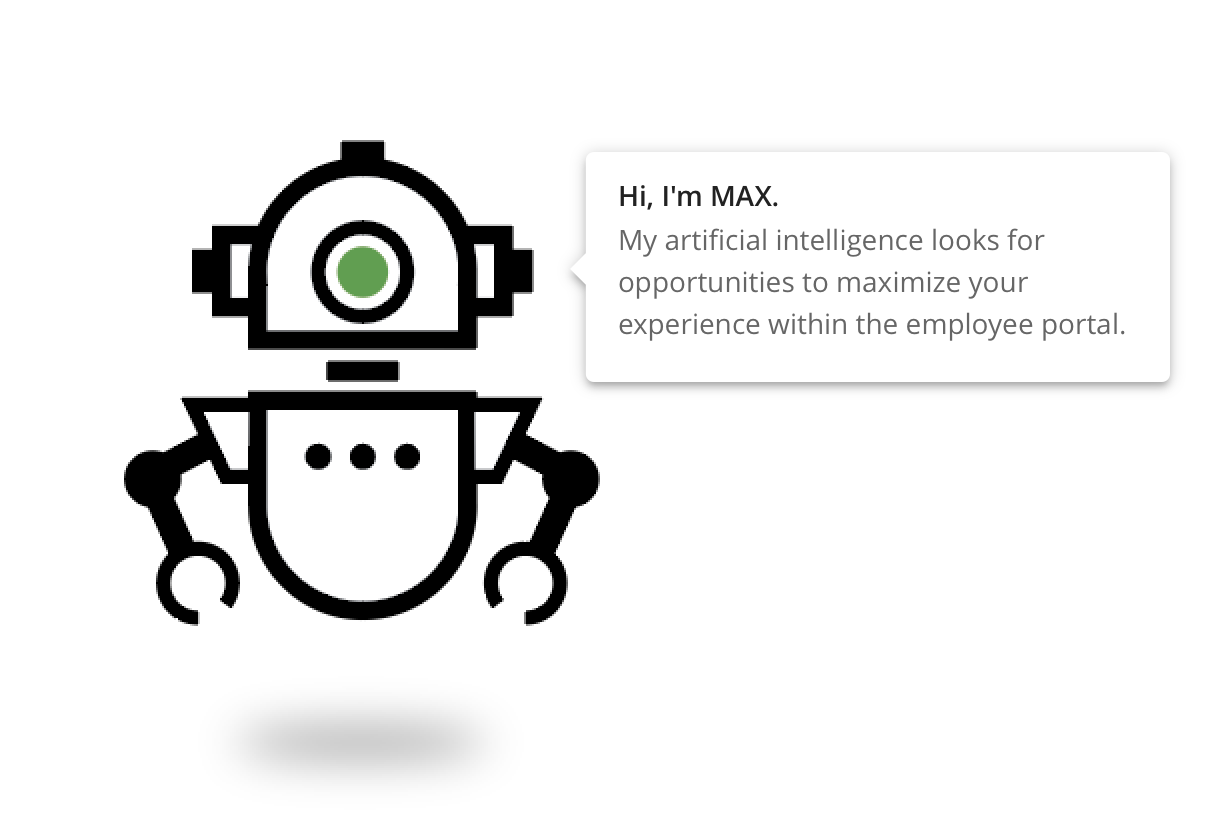
At Nutrien, facing the exact same skepticism toward machine-learning recommendations, we gave the engine a humble, honest face named Max — a personality that admitted when it might be wrong and allowed the human crop consultant to make the final call based on the data Max surfaced. Different industry, identical insight: people don’t trust a model; they trust the interface and the humanity wrapped around it.
3. Taming Data Overload
Runners and crop consultants are both drowning in numbers. The temptation in both industries is to build a dashboard that shows everything. The better answer, in both, was subtraction.
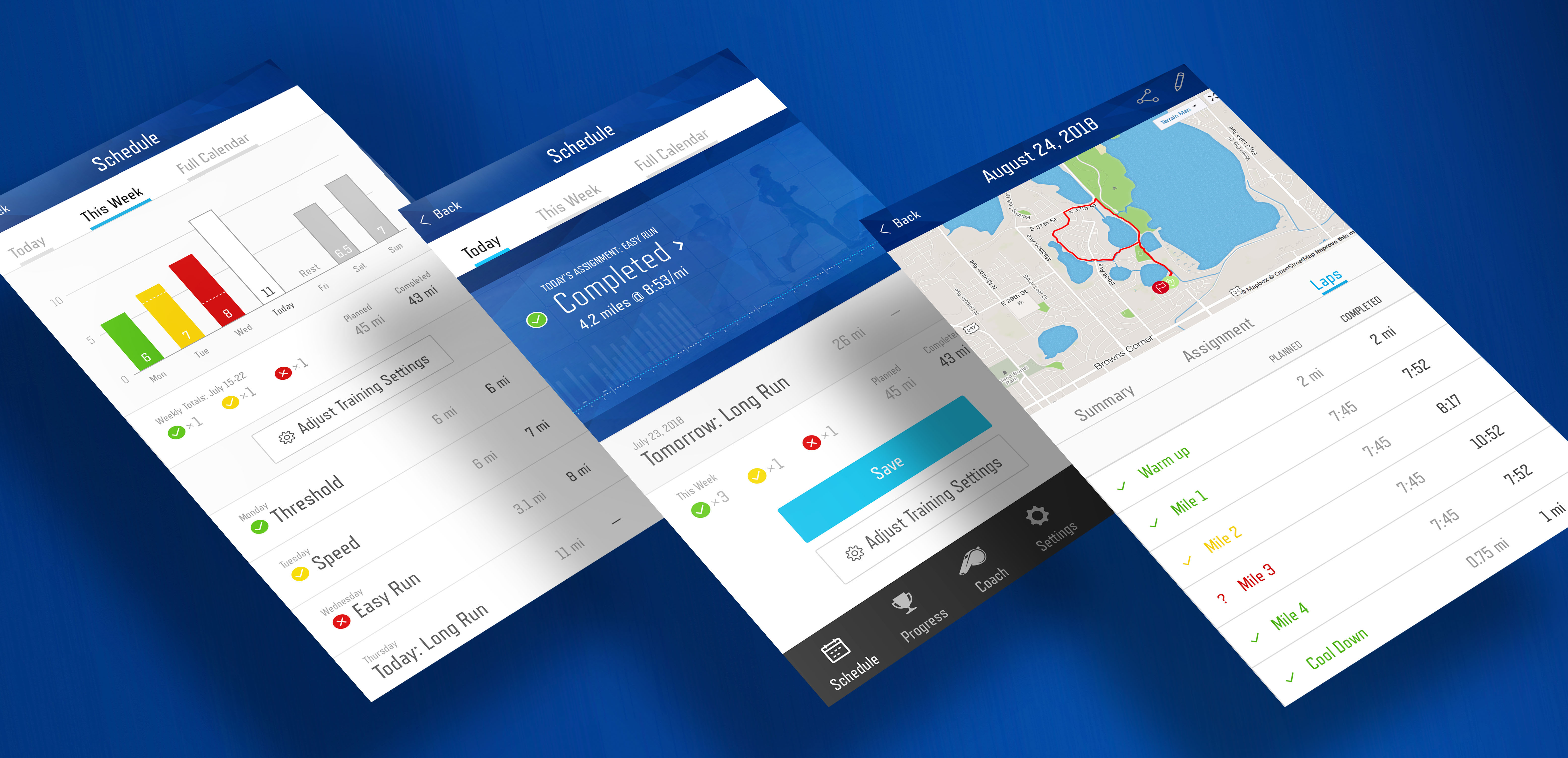
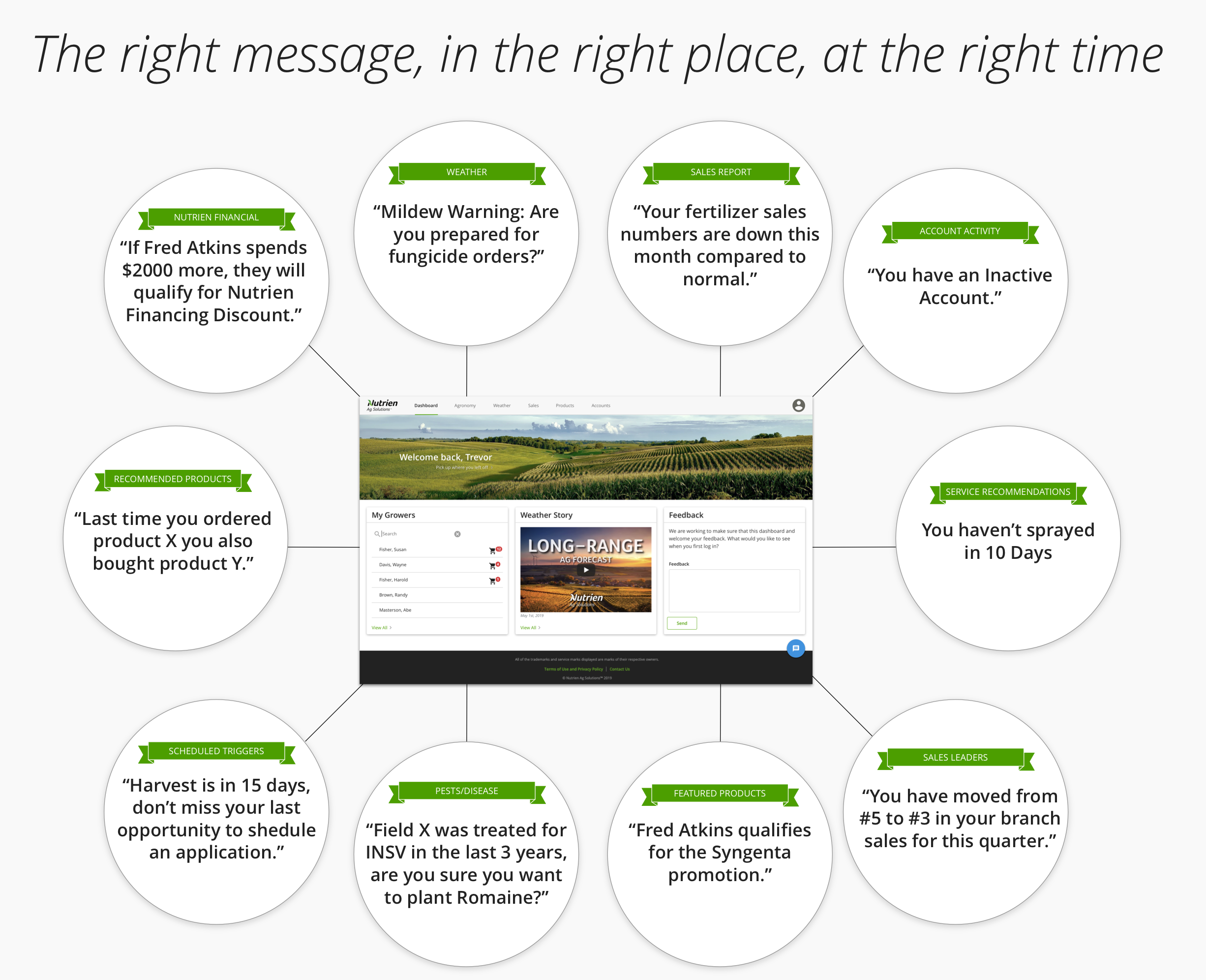
At Runcoach, the calendar redesign replaced a wall of statistics with three simple views — today’s workout, the week, the month — so an athlete could glance and know what to do. At Nutrien, the employee dashboard followed the same approach: instead of a control panel of every feature, it delivered the right message, in the right place, at the right time.
4. Creating Engagement
Products only work if people come back. Engagement is more than a vanity metric — it is the mechanism that makes products successful. Runcoach’s goal-and-progress loop kept athletes returning and gave them signals about what was working. Nutrien’s tools needed crop consultants to verify our AI’s recommendations precisely so it could learn from their feedback. In both cases, designing for engagement was really designing the feedback loop that improved the underlying system.
5. The Universal Principles
Strip away the running shoes and the fertilizer and the same four problems remain in nearly every data-rich product: there’s an opportunity buried in the data, a need to build trust before anyone will act on it, a fight against data overload, and a constant push to create engagement. The tools and process I used to tackle them — field research, storytelling, rapid prototyping, testing and iterating — transferred across industries.
Conclusion
The most useful thing a designer can develop isn’t expertise in a single domain. It’s the ability to recognize universal principles, common challenges, and understand the pain points of real people who use your product. Learn to solve the human problem, and you can walk into an industry you’ve never worked in and change products for the better.