Meet Max: Designing Trust into AI
Role: Senior UX Designer, Nutrien Ag Solutions
When: 2019–2020
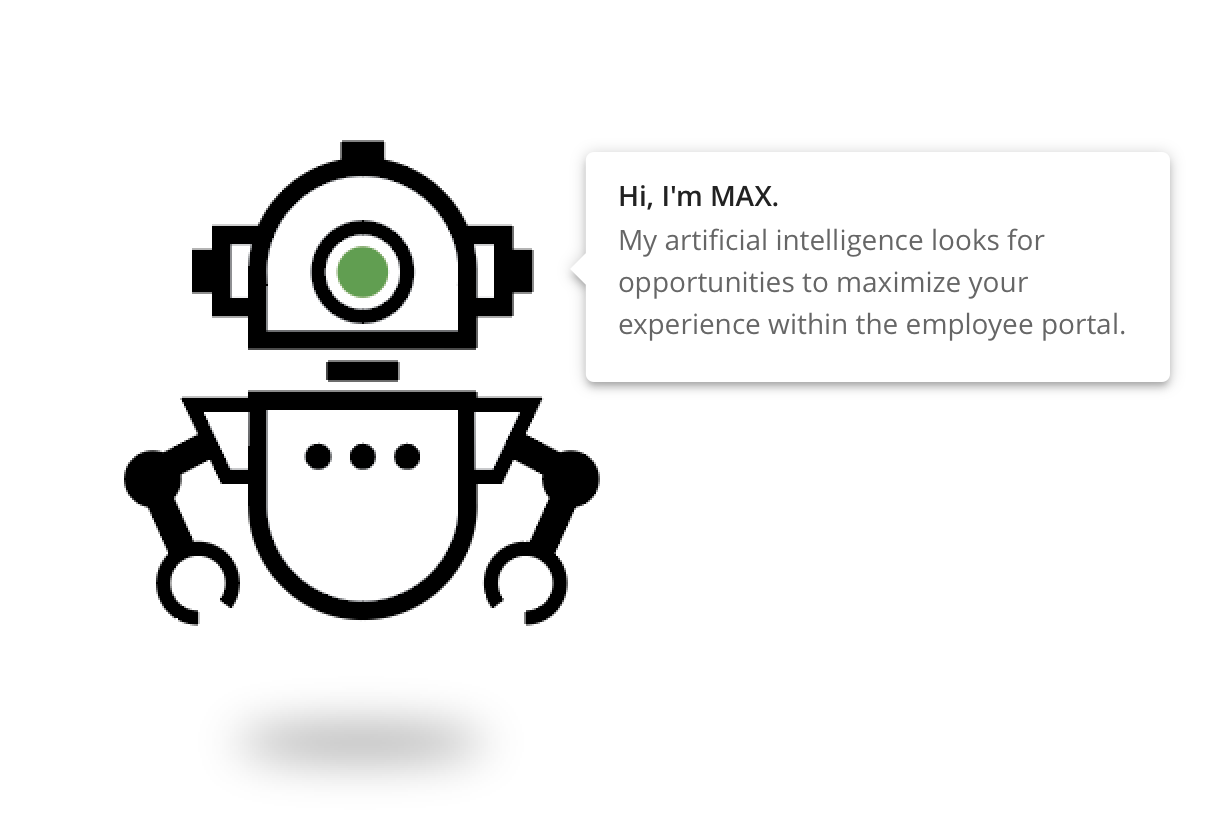
_This project was underway in 2019 and 2020 — a couple of years before ChatGPT put AI in front of everyone. Machine learning was evolving rapidly in those days because it was clear that large data sets held great insights if you could extract them from the huge datasets that companies like Nutrien possessed.
Introduction
As a Senior UX Designer at Nutrien Ag Solutions, I worked on the Employee Experience Hub — “EXH” for short — the platform used by Nutrien’s sales force of more than 20,000 crop consultants, alongside a UX team of 12 designers and researchers. Part of that work was bringing machine-learning recommendations into the tool. We built a data engine, called Deep Green, to generate the recommendations, and we gave its output a face: a friendly character named Max. This is the story of what designing Max taught me about the user experience of AI. This project helped me answer the difficult question of, “How do you get an expert to trust a system that is sometimes confidently wrong?”
1. The Problem
Asking experts to trust a machine
To understand why this was hard, you have to understand who the user is. Crop consultants are not order-takers. They know more about agronomy than many of the farmers they sell to, and a recommendation from a crop consultant lands more like a prescription from a doctor than a sales pitch. Those relationships with growers span years, sometimes decades.
So when EXH began to evolve from a system that recorded what a consultant sold into one that recommended what they should sell next, we ran straight into a wall. We were asking deeply experienced experts to take advice from software — and they didn’t trust it, partly because they didn’t trust the data underneath it, and partly because being told what to do felt like a challenge to their expertise.
This is the AI trust problem in miniature, and it has not changed since. I heard it plainly when I sat with consultants in the field:
“Right now it really does me personally no good, because I can’t extract the information all the way down to the final detail that I need.”
“The thing that drives me the most bonkers is that I don’t have access to the answers… Give me access to real numbers. What did I sell it for? How much did I sell? What was my margin?”
Our sales force didn’t want weak recommendations. They craved access to tools that allowed them to easily analyze their own sales, margins, and crop history. They didn’t have patience for guesses from a machine because the stakes were too high. Patience for errors was thing because a single sale typically meant tens of thousands of dollars.
2. Field Research
Listening before designing
I spent a lot of time in the field. I traveled to facilities to see them in action, sat in offices watching sales being fulfilled, and rode along with crop consultants to watch how they actually got their work done. I listened to their frustrations and collected their ideas, then brought those stories back to the team so the people building EXH could picture the person they were building for.

This is where the core tension surfaced — one that anyone building AI products will recognize today. The better a crop consultant was, the more a bad recommendation could cost them, which meant the people we most wanted to help were also the ones with the most to lose if our model got it wrong. And our model would get things wrong; this was years before “hallucination” entered the product vocabulary, but the failure mode was the same. So I stopped asking “how do we make the recommendations perfect?” and started asking the more honest question that every AI team eventually faces: “how do we make an imperfect system worth engaging with — long enough to make it better?”
3. Deep Green and Max
Separating the engine from the interface
Under the hood, Deep Green was the data engine. It was an experimental machine-learning product that mined Nutrien’s enormous archive of historical sales data — one of the largest agronomic data sets in the world — to surface lost “opportunities” a busy consultant might otherwise miss. This was the kind of machine learning we were quietly using well before the AI boom made it fashionable. Deep Green was powerful and completely invisible to the user.
Max was the part the consultant actually interacted with. He was the user-facing layer that delivered Deep Green’s recommendations clearly, and gathered the responses that would make Deep Green smarter.
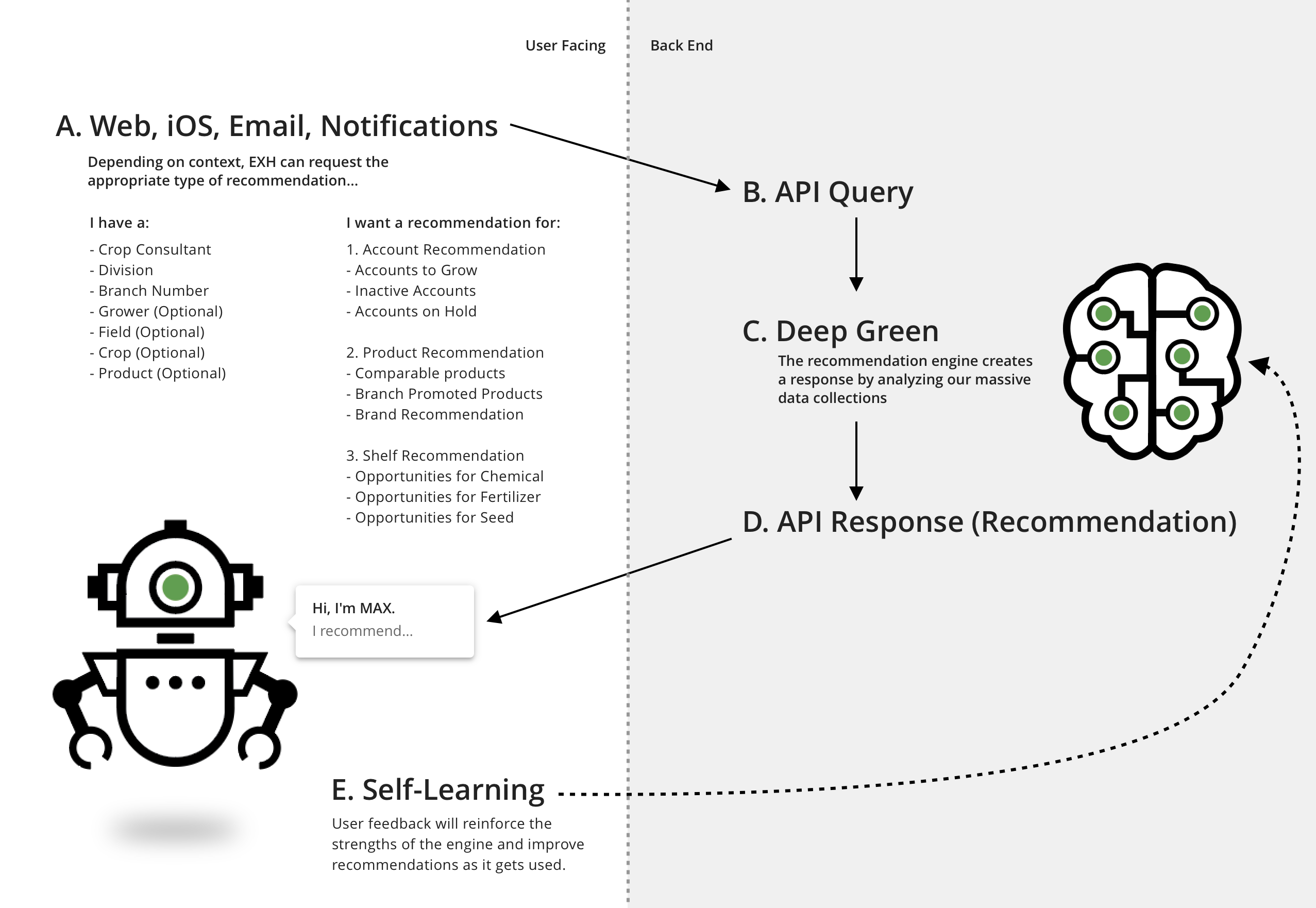
Splitting the system this way reflected a conviction I still hold, and one that matters more in the LLM era than ever: the interface that delivers the message is just as important as the model that generates information. Deep Green could be brilliant and still fail if Max felt cold, arrogant, or evasive. The model is where the intelligence lives; the interface is where trust is won or lost. That is as true for a chatbot answering questions today as it was for a recommendation engine in 2020.
In designing Max I looked for evidence to support or disprove my own skepticism because my hunch was that a cartoon robot was never going to fix our trust problems by itself. But I also believed that a little personality could help. A friendly, humble face buys patience — people forgive a helper for being wrong in a way they never forgive a faceless “system.” A character also invites the interaction we needed to gather feedback. And anything that broke the stiff, corporate feel of an internal tool was worth trying.
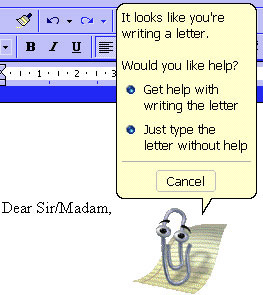
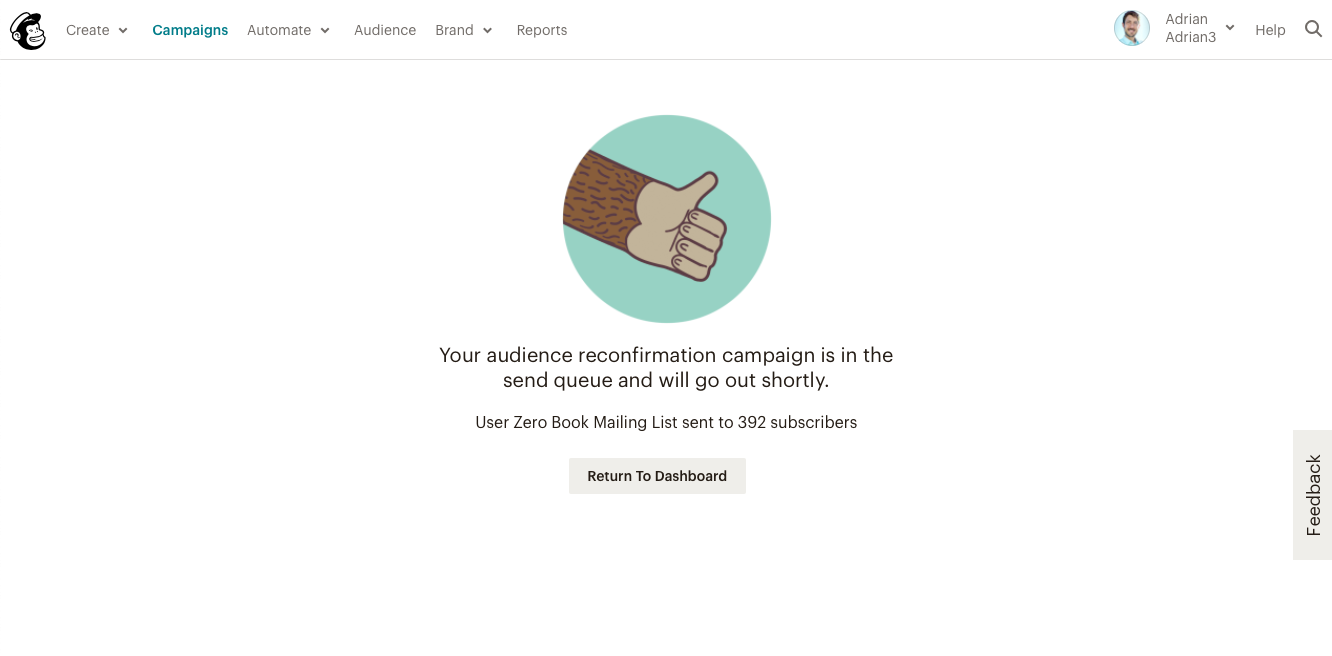
Personality is a double-edged tool, though — a lesson the whole industry is relearning now that every AI product has a “voice.” Personality with no usefulness becomes an interruption people resent. Clippy was the canonical example of personality done wrong. Mailchimp, on the other hand, uses warmth and humor to reward you for finishing a task. If done right, it is possible to use a mascot successfully.
4. Designing for Opportunities
What a recommendation looks like — and how to argue with it
The unit of value in all of this was the opportunity — a specific, dollar-valued, explainable recommendation a consultant could act on, dismiss, or dig into. For consultants to take it seriously, it had to be concrete and, just as importantly, easy to push back on.
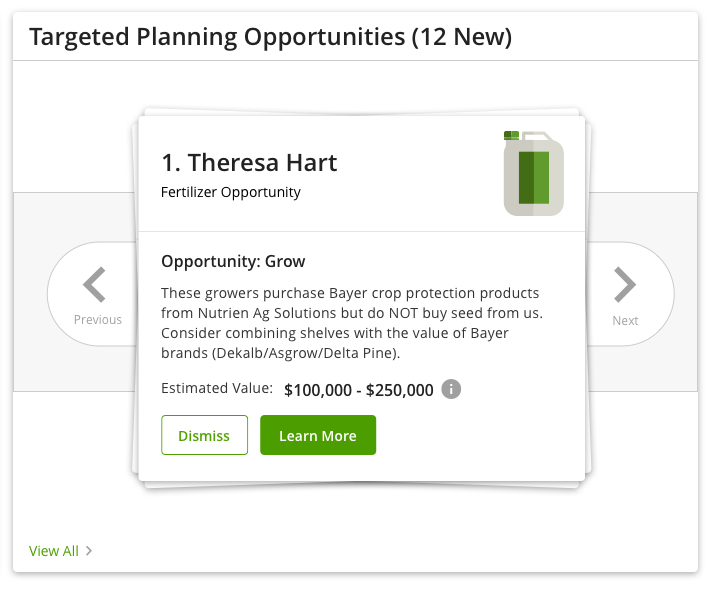
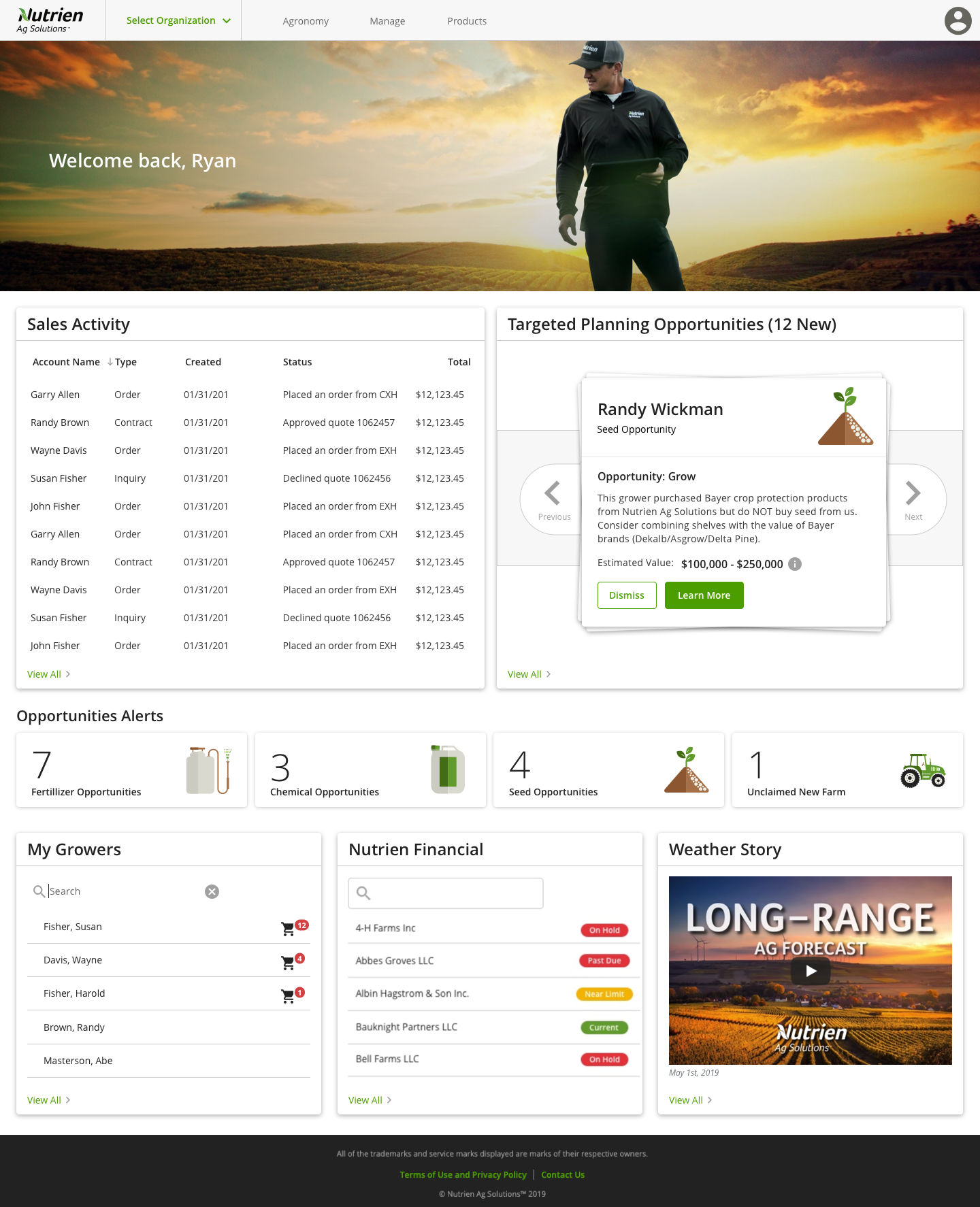
In the product, those opportunities lived inside the consultant’s dashboard, alongside their sales activity, their growers, financials, and the weather — so Deep Green’s recommendations showed up in the flow of real work rather than as a separate “AI feature” bolted on the side.
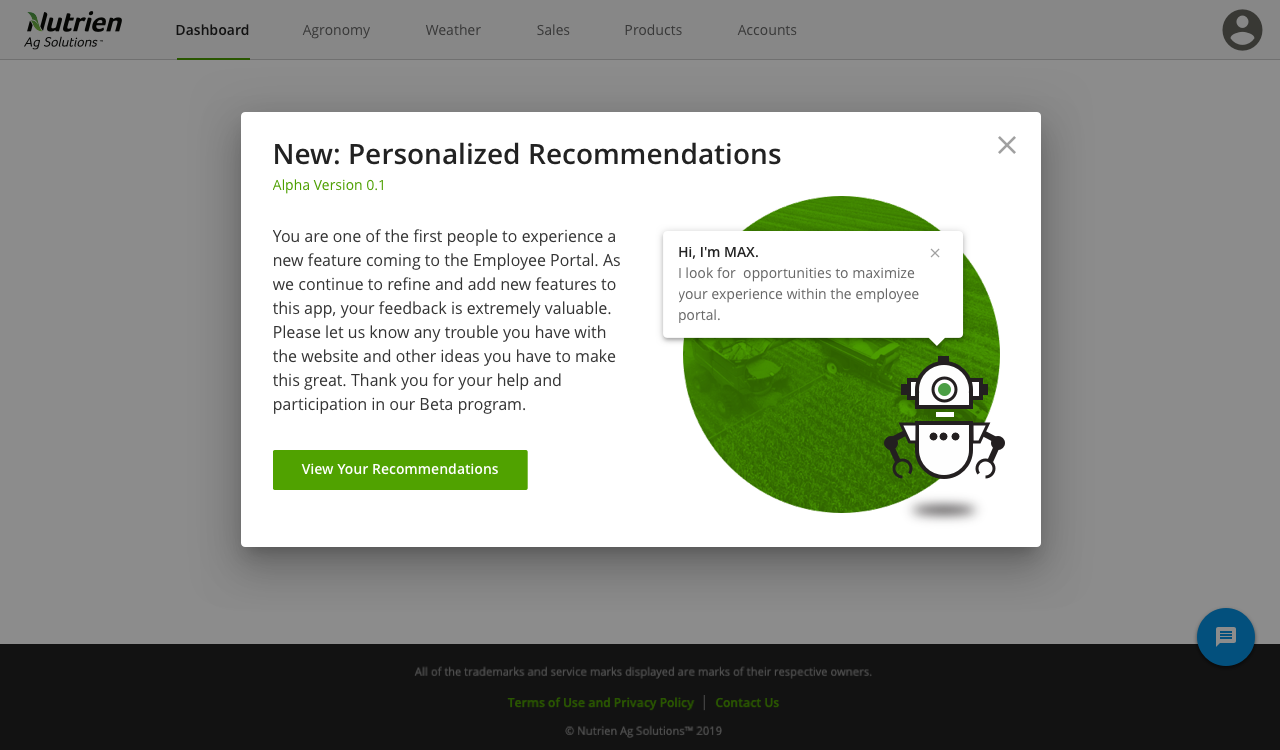
The first version of Max was clearly marked as an alpha version, an open beta, with feedback openly requested. The point was to set expectations rather than oversell. Years later I’d watch the best AI products do exactly this: tell people plainly that the system is new and can be wrong.
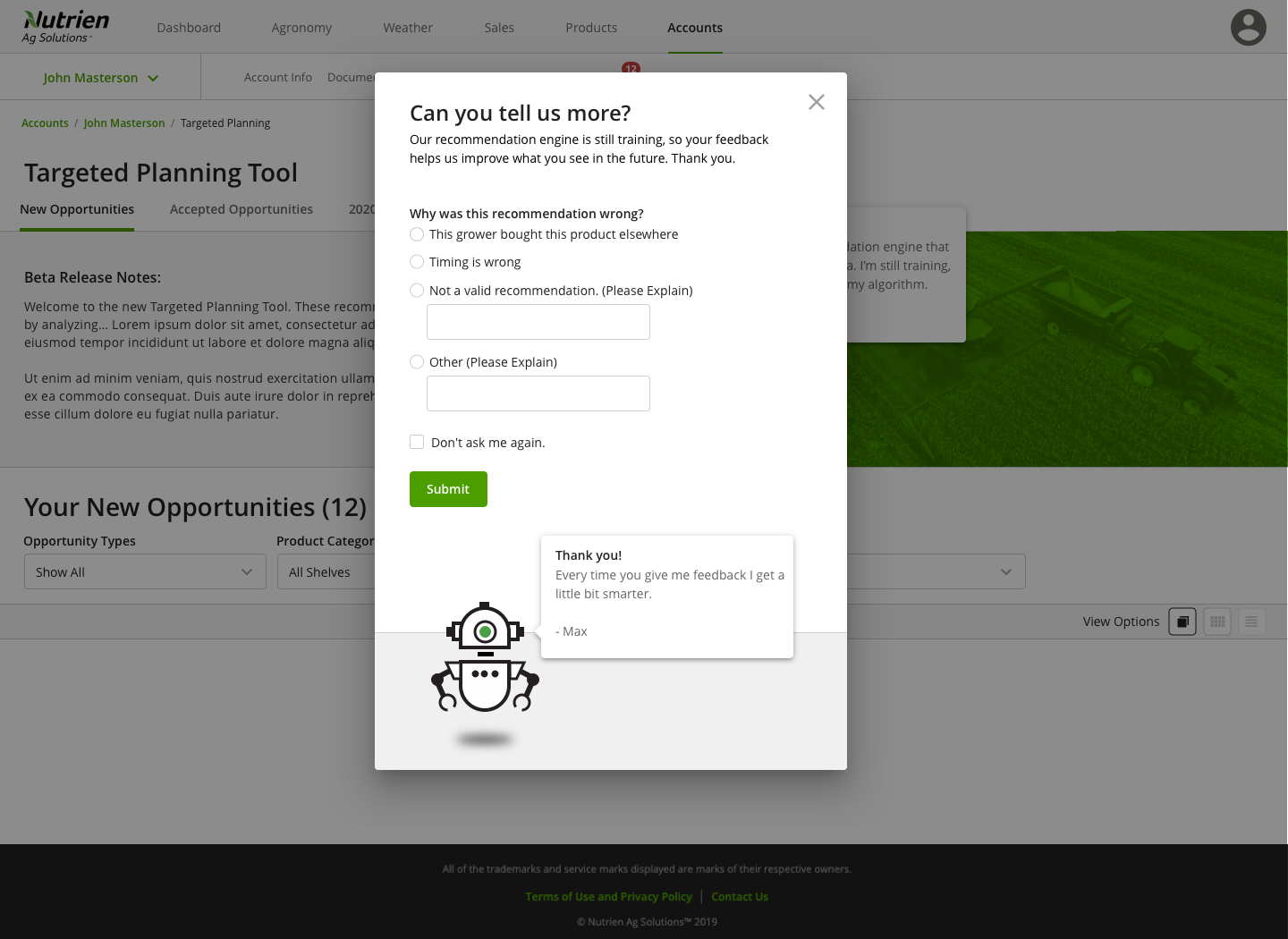
The most important interaction wasn’t Max being right. It was making it effortless for a consultant to tell Max when he was wrong. Every correction became a piece of training data, and admitting the engine was still learning became part of the design itself. This human-in-the-loop feedback system built trust as it improved itself.
5. What We Learned
Authenticity and humility build trust
The starting hypothesis was testable. Will Max foster forgiveness and encourage feedback? I ran concept tests around this question, comparing a version of the experience with Max against one without him. The point wasn’t to find out whether people liked a cartoon. It was to learn whether a friendly, humble interface actually changed how forgiving people were of an imperfect engine, and whether it made them more willing to talk back to it. We took Max back to crop consultants to see how it landed. The reactions told the real story:
“I liked Max. It seemed friendly and open. I’ve got to a stage in my career where I don’t like people telling me what to do. Without Max, that’s what it felt like it was doing.” — Steve Sackett, Crop Consultant
“I feel like we’re on a journey where in three to five years we’ll have tools more along the lines of what we’re working toward here. I understand it takes steps to get there.” — Bradford Smith, Crop Consultant
And the counter-voice that kept us honest:
“I’m too busy to waste my time with the digital platform. Agriculture is a lot more difficult than an algorithm thinks. Also, the robot on the screen is dumb.”
That tension was the lesson. The same friendliness that earned patience from one consultant read as condescension to another. What separated the two wasn’t the cartoon — it was whether the tool was honest about its limits. Max worked when he let the product admit it was still learning, which turned the engine’s biggest liability — imperfect early recommendations — into a trusted feature people found value in.
Two principles came out of it: authenticity increases trust, and humility increases trust. When you ask an expert to rely on a machine, the machine earns its place not by pretending to be right, but by being honest when it isn’t.
6. Why This Still Matters
The UX of AI is the UX of being wrong gracefully
When ChatGPT arrived and suddenly everyone was designing for AI, none of the hard problems were new to me. They were the Max problems, scaled up. A model that is confident and occasionally wrong is a bad user experience. Users need mechanisms to push back against data they feel is wrong. There is a temptation to hide a system’s limitations behind a slick, certain-sounding voice, but you forfeit trust the first time it burns someone.
Designing Max left me with a few convictions I now apply to every AI product:
- Trust is supported by the interface, not inherent in the model. No amount of accuracy survives an experience that feels arrogant or opaque. Deep Green needed Max, and a powerful model today still needs an interface that earns belief.
- Design for the system being wrong, not for the demo. The error path is the product. Make correction effortless, and every mistake becomes a chance to improve rather than a reason to quit.
- Humility outperforms false confidence. Telling users plainly that a system is new, limited, and learning earns more durable trust than pretending it is infallible.
- Personality is leverage, and leverage cuts both ways. A voice can invite people in or condescend to them. The deciding factor is whether it respects the user’s expertise.
Max was designed prior to the AI era we exist in today but we were already designing for the thing that matters most in AI: not how smart the system is, but whether a real expert is willing to trust it. That question only gets more important from here.