Building a UX Practice at the World’s Largest Ag Company
Role: UX Manager, Nutrien Ag Solutions (Digital Commerce)
When: 2019–2022
Outcome: Grew the design team from 7 to 15
Introduction
Nutrien is the world’s largest agriculture company — roughly $30 billion in annual sales, a mission to feed the world, and the largest archive of agronomic data on the planet. I came in as a contractor, was hired on full-time as a Senior UX Designer, and was eventually promoted to UX Manager for the digital commerce division. The digital organization was young and the design team was small, so my role grew from designing screens to shaping the UX vision and product roadmap alongside product and engineering leaders — and building a design practice that could hold its own inside a company that size. This case study is about that work: growing the team, building a culture, and teaching a large organization to design around its users.
1. Growing the Team
From 7 designers to 15
A practice is only as strong as the people in it, so a large part of my job was hiring and growing them. I helped grow the design team from 7 to 15 designers and researchers — recruiting, running portfolio reviews, interviewing, and evaluating candidates before they were hired.
As our team grew I invested just as much time on the people already there as I did on new hires: mentoring designers, removing roadblocks, and helping them advance their careers. Most of all I tried to create an environment of trust and safety, because designers do their bravest work when they aren’t afraid to show something unfinished.
2. Building a Design Culture
The habits that make design stick
Hiring people is easy compared to building the culture that makes their work matter. I established the rituals a healthy design practice runs on: regular critiques, retrospectives, ongoing user research, shared design systems, usability studies, and the collaboration tools to support them. To modernize how the team worked, we transition from Sketch to Figma as the primary design tool, which made high-fidelity mockups and interactive prototypes a normal part of how we communicated ideas.
The cultural change I’m proudest of wasn’t about tools, it was that I helped establish customer obsession as one of Nutrien’s core values. The user’s pain wasn’t just something the design team cared about, everyone in the organization from product managers to developers felt accountable to the people we were building product for.
3. Teaching the Organization
From a solution mindset to a user-centered one
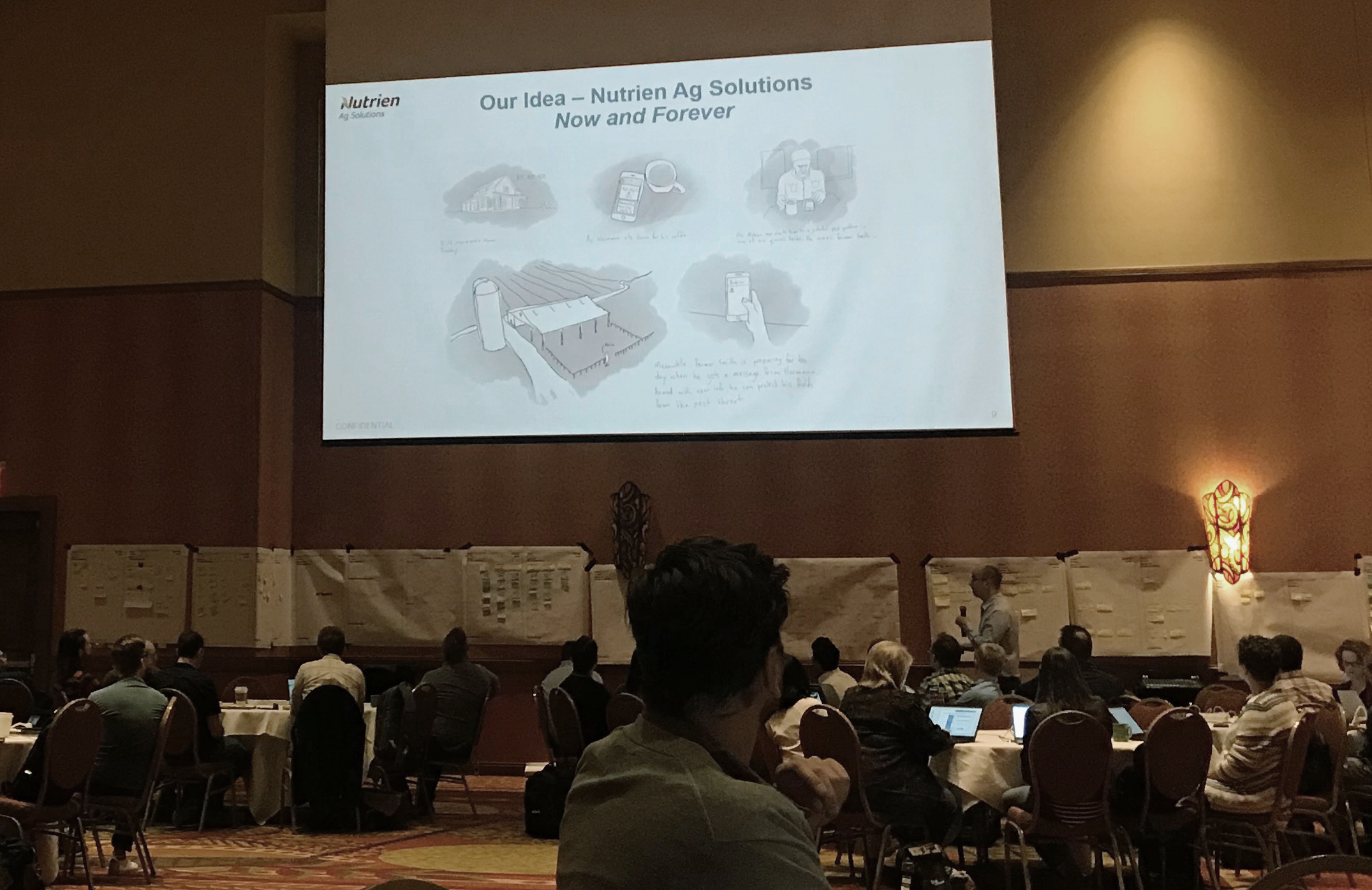
A company this size doesn’t lack expertise — it’s full of people who know agronomy, logistics, and sales deeply. What it needed was the habit of starting from the user. Big organizations tend to arrive at meetings with the solution already named. One of a UX designer’s most useful skills is the ability to sit through a presentation like that and tactfully ask, “What problem are we trying to solve?”
That question turns a solution mindset into a user-centered one. “Build a dashboard” becomes “How do we deliver the right message, in the right place, at the right time?” To support that shift I leaned on methods that travel well in a large company — Amazon’s “Working Backwards” approach, journey maps, and concept testing. I also ran UX workshops with major partners such as John Deere, BASF, and Syngenta, extending user-centered thinking beyond Nutrien’s own walls.
4. Spreading the Story
Research as a shared language
I traveled across the country to meet users and watch how our products were actually used in the field, and the real leverage came from what I did with that research afterward. I turned it into stories — often with drawings and storyboards — that helped teams empathize with the people who relied on our software.
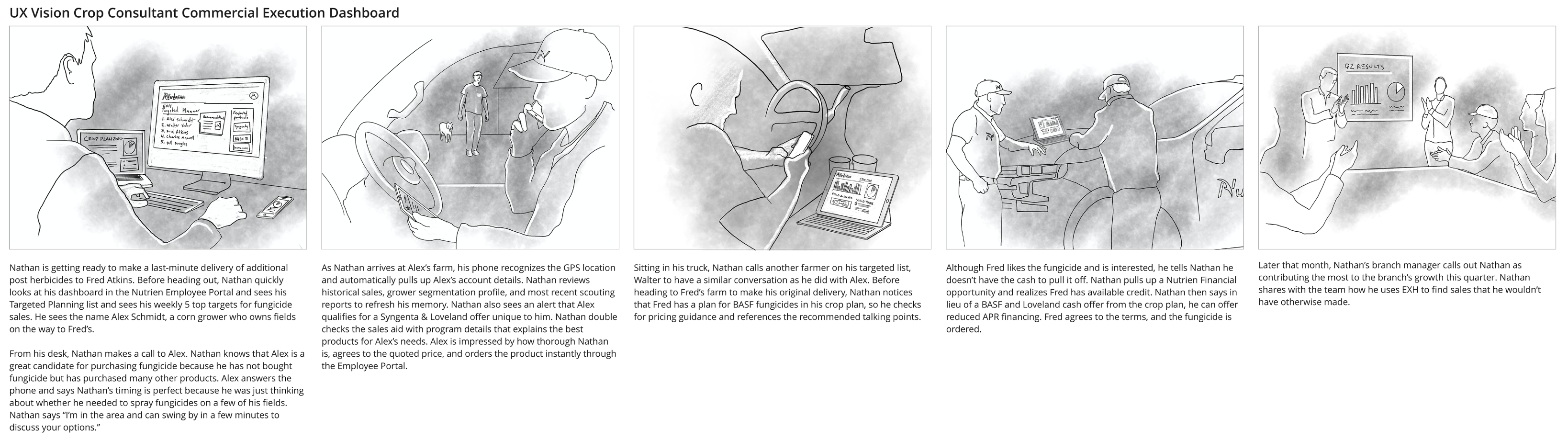
Those stories took on a life of their own. They showed up in quarterly planning, in executive summaries, and in story-mapping sessions, and they became a shared reference point as teams worked to make our users’ jobs easier. When the pandemic hit, we kept this engine running by moving user research remote rather than letting it stall. Across a company spread around the world, a shared, human picture of the user became one of the most effective alignment tools we had.
5. What the Practice Produced
Outcomes, not just process
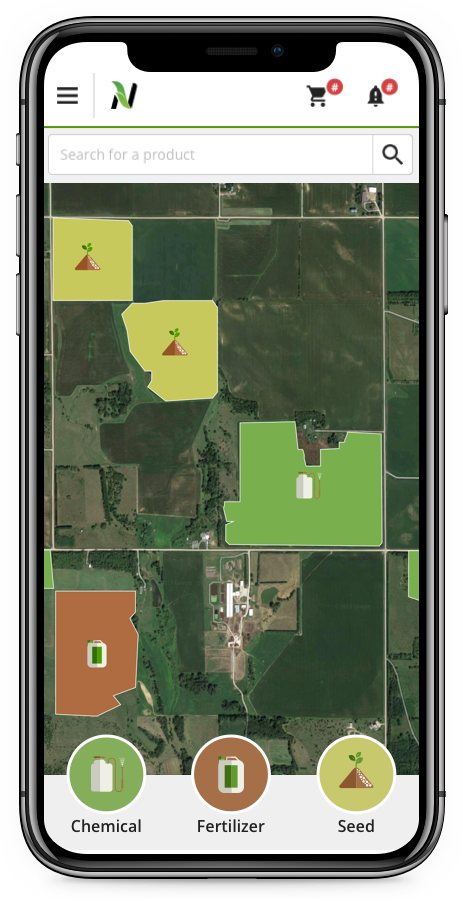
The evidence of our design team’s success came in the form of an agriculture e-commerce platform that generated over $5 billion in sales in its first three years. It produced an employee dashboard built around what crop consultants actually needed each morning; an experimental machine-learning product (nicknamed “Max”) that mined Nutrien’s enormous archive of historical sales data to surface opportunities, designed to earn the trust of skeptical experts; and a mobile experience meant to meet consultants where they really work — in a truck, in a field, on a phone.
Conclusion
I came to Nutrien knowing almost nothing about agriculture. After more than three years of immersive problem-solving I left with deep respect for farmers and the systems that feed the world — and with a conviction that the hardest part of UX at scale isn’t the design itself. It’s building a team and a culture that keeps asking, again and again, what problem we’re really trying to solve.